






In Vitro Evaluation of Anti-Hair-Breakage Efficacy of 20% PTT-6
An Ex Vivo Tress Study Using Tensile Breaking-Work Analysis
Independent laboratory testing: Hangzhou C&K Testing Technic Co., Ltd. · Report No. CN26070675EN · Issued 4 August 2026
Background
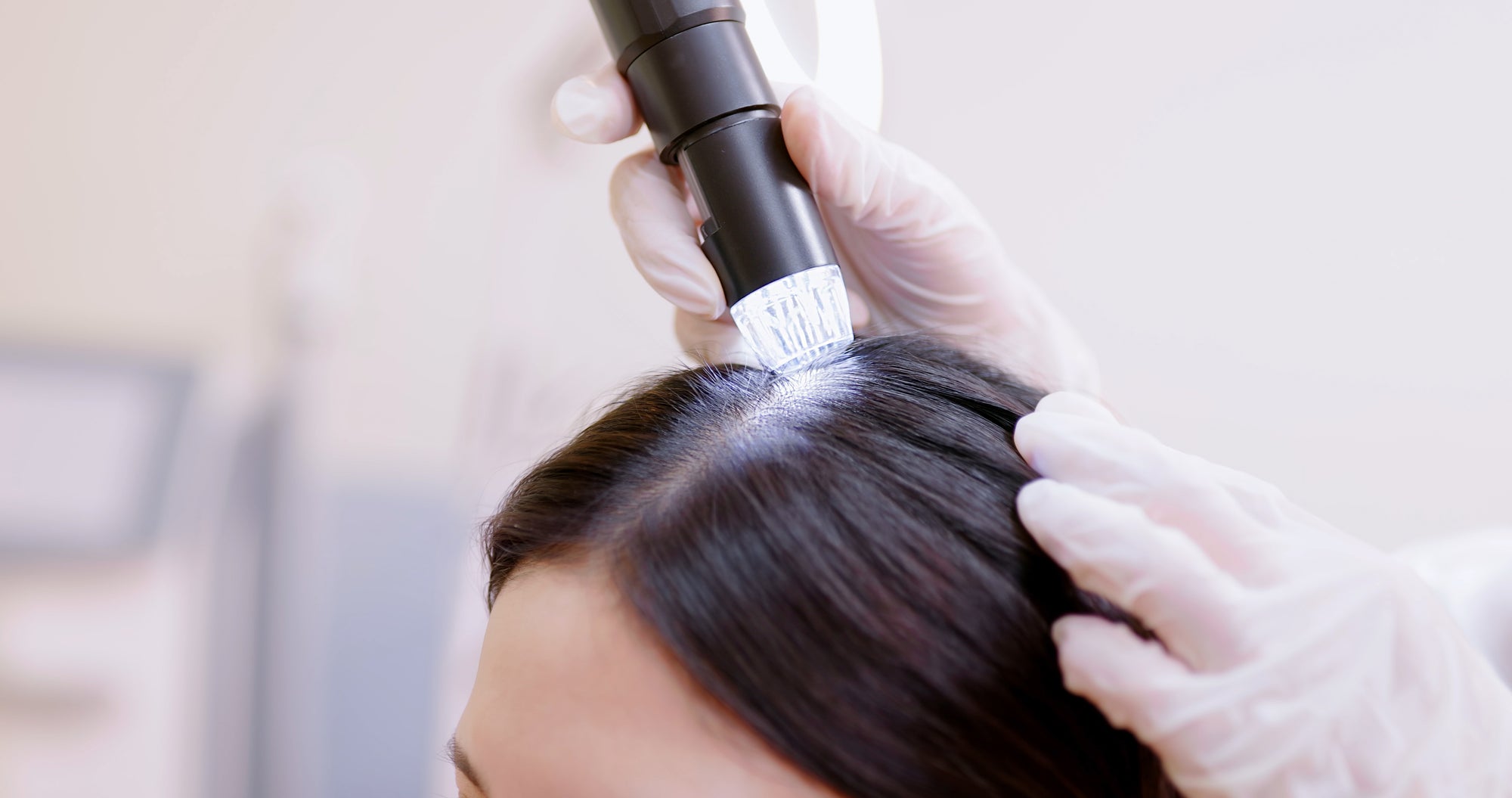
Hair breakage is one of the most common concerns raised in professional consultations, particularly for chemically processed, bleached, or mechanically stressed hair (e.g. brushing, detangling, heat styling, and manipulation during services). Breakage occurs when the mechanical work required to fracture a hair fibre - its “breaking work,” measured in millijoules (mJ) - falls below the stress applied during everyday grooming, such as combing, brushing, or styling. Ingredients and formulations that increase breaking work are understood to make hair more resilient to this kind of mechanical damage. This write-up summarizes an independent, laboratory-based (in vitro) tress study commissioned to evaluate whether a 20% concentration of PTT-6 improves the strength of chemically damaged human hair
Study Design
The study followed T/GDCA 026—2023, the published Test Method for Anti-Hair Breakage Efficacy of Hair Products, with tensile strength measured on a fibra.one Multifunctional Hair Tester (Tensile Performance Test Accessory). Two medium chemically damaged human hair tresses (Chinese Han donor population; 15 cm × 2.5 cm, 5.0 g each) were prepared by bleaching with a fresh hydrogen peroxide/ammonia mixture (37°C, 30 minutes), rinsing, soaking in the mixture, then cleansed with 1 mL of 10% sodium lauryl sulfate (SLS) solution and conditioned for 24 hours at 21±1°C and 50±10% relative humidity.
One tress served as the test group and was immersed in the 20% PTT-6 test solution for 24 hours according to product-use instructions; the paired control tress received no treatment, with all other handling identical between groups. Forty individual strands of matched diameter were tested per group; the five highest and five lowest values in each group were excluded as outliers, leaving 30 data points per group for statistical analysis. Group means were compared using an independent-samples t-test (two-tailed, α = 0.05) after confirming normal distribution (Shapiro-Wilk test).
Results
The test group treated with 20% PTT-6 showed a mean breaking work of 15.24 ± 2.57 mJ, compared with 10.64 ± 1.77 mJ for the untreated control - a 43.23% increase (p < 0.001, extremely significant). Because higher breaking work indicates that more mechanical energy is required to fracture the hair fibre, this result indicates a measurable improvement in tensile resilience following treatment with PTT-6.

Table 1. Descriptive statistics for breaking work, n = 30 strands per group (5 highest and 5 lowest of 40 raw values excluded per group). Significance marker ‘**’ denotes p < 0.01.

Figure 1. Mean breaking work (mJ) ± SD by group. ** p < 0.01 vs. control.
Practical Relevance
For professionals, breaking work is a direct, objective proxy for how much a hair fibre can withstand routine mechanical stress - brushing, detangling, heat styling, and manipulation during services - before it snaps. A 43% improvement over untreated, chemically damaged hair suggests that regular use of 20% PTT-6 may help clients with bleached, colour-treated, or otherwise compromised hair better withstand the cumulative mechanical stress of daily grooming and in-salon/clinic handling, which may translate into fewer visible signs of breakage such as split ends, fly-aways, and thinning along the length of the hair shaft.
Study Considerations
This is an in vitro (ex vivo) laboratory study conducted on isolated, chemically damaged hair tresses under controlled conditions. As with all bench-top tress testing, results describe the mechanical behaviour of hair fibres under standardized laboratory conditions and may not fully replicate real-world use, which involves additional variables such as individual hair biology, styling habits, environmental exposure, and product application technique. The study design followed a single published standard (T/GDCA 026—2023) using one matched pair of tresses per group; broader confidence would benefit from replication across additional donor tresses, hair types, and damage levels, as well as complementary in-use or consumer
perception studies.
Conclusion
Under the conditions of this independent, GDCA-standard in vitro tress study, 20% PTT-6 produced an extremely significant increase in the tensile strength of chemically damaged human hair relative to an untreated control (+43.23%, p < 0.001), supporting an anti-hair-breakage benefit at the fibre level. This laboratory evidence provides a useful, standards-based data point for how PTT-6 may support hair resilience, alongside the study’s in vitro scope and considerations noted above


